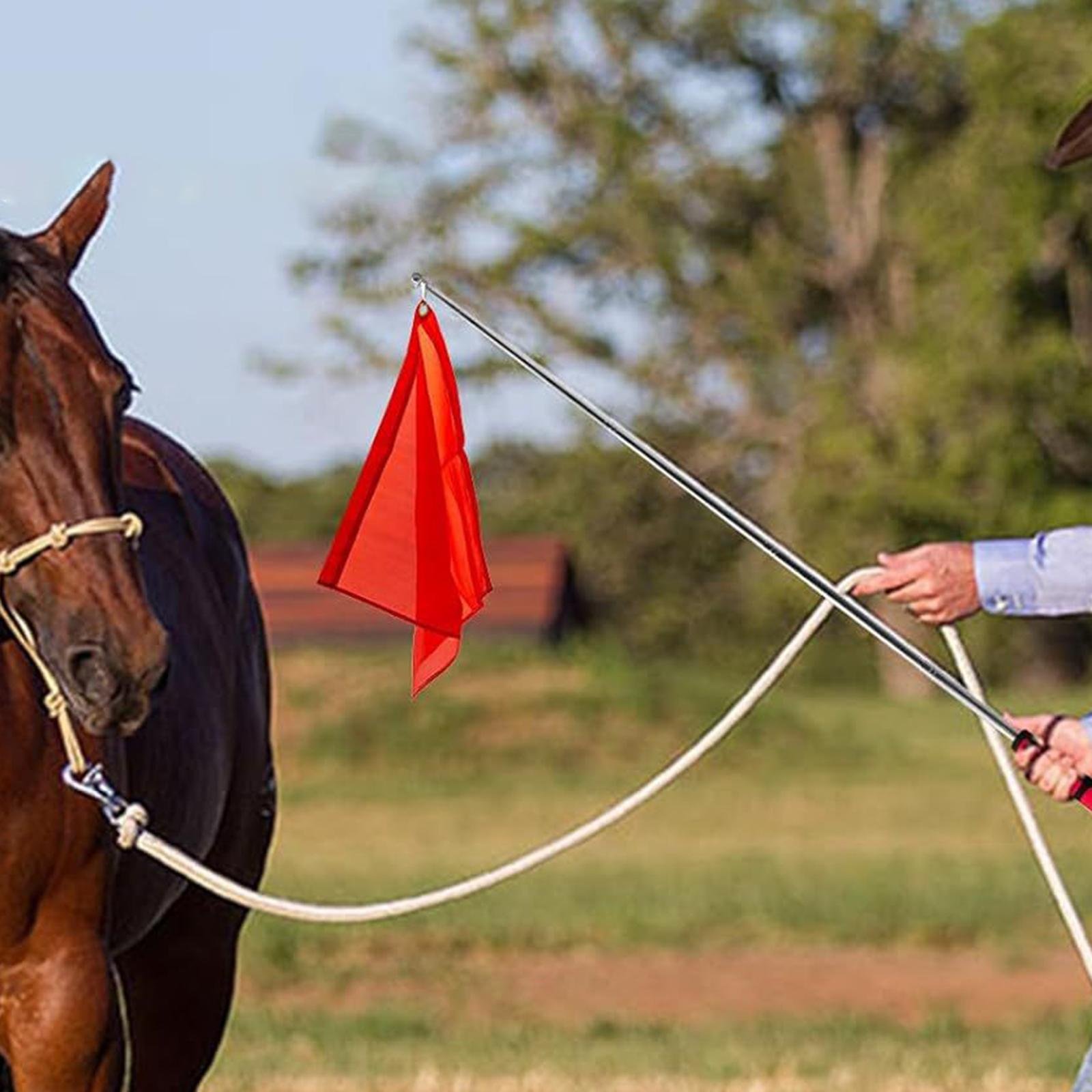
If you have spent time around horse trainers, groundwork clinics or natural horsemanship, you may have seen a handler working with a small flag attached to the end of a training stick or pole.
But what is a horse training flag, and what is it actually used for?
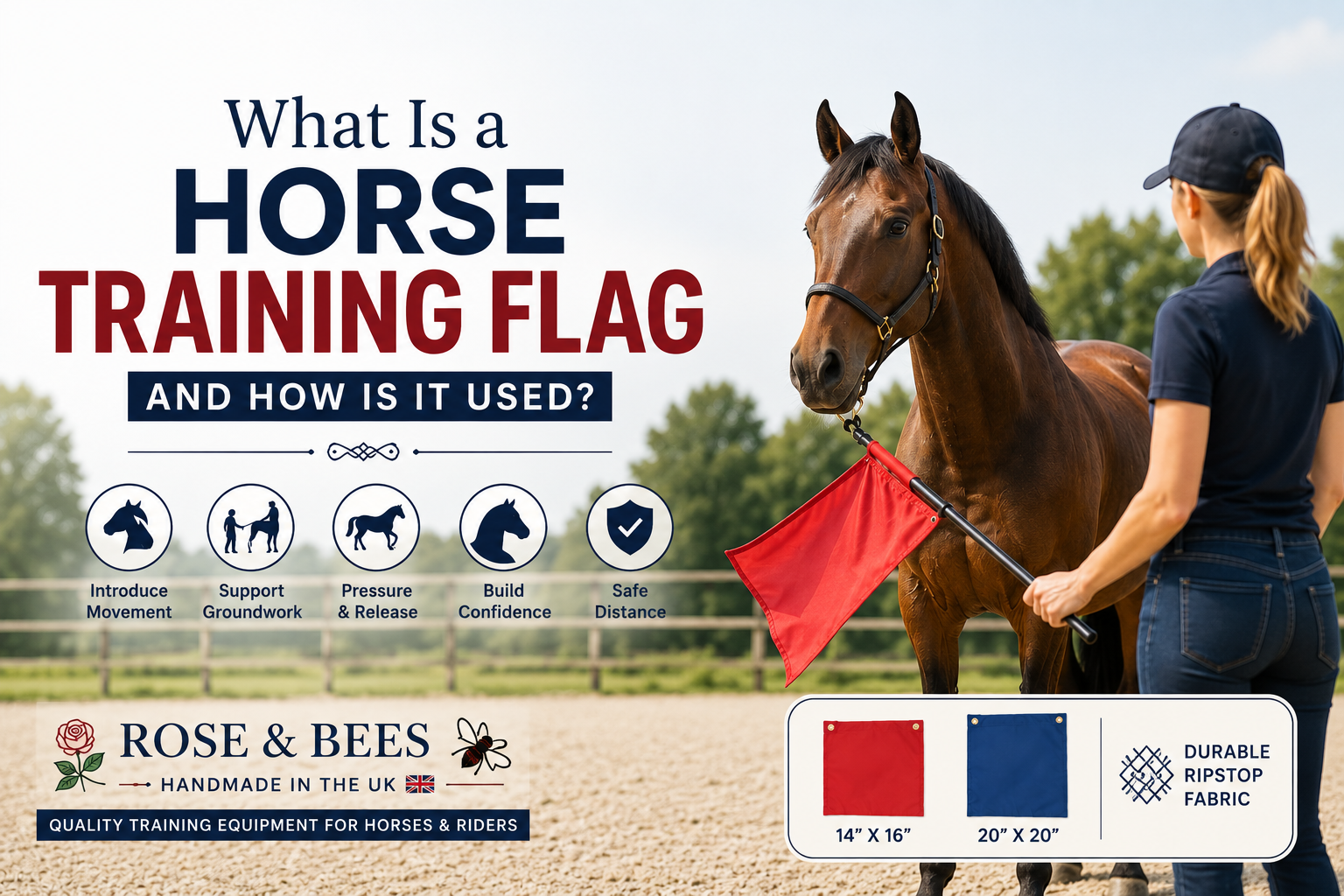
A horse training flag is a simple yet versatile groundwork tool used to help communicate with a horse from a safe distance. It can be used to introduce a horse to movement, teach responses to pressure and release, encourage confidence around unfamiliar objects and help direct the horse’s movement during groundwork.
When used correctly, the aim is not to frighten or chase the horse. Instead, the flag becomes an extension of the handler’s arm, allowing clear communication while giving both horse and handler more space.
In this guide, we’ll look at what horse training flags are, why trainers use them, how they can be introduced and some important points to remember when working with one.
What Is a Horse Training Flag?
A horse training flag generally consists of a lightweight piece of fabric attached to a training stick or pole.
The movement of the fabric makes the flag easy for the horse to see, while the length of the stick allows the handler to communicate without always needing to stand directly beside or touch the horse.
You may also hear them described as:
- Horse groundwork flags
- Horsemanship flags
- Training stick flags
- Horse desensitising flags
- Horse familiarisation flags
Although terminology varies between trainers, the principle is broadly the same: the flag gives the handler a visible extension of their body language.
What Is a Horse Training Flag Used For?
Horse training flags can be used in several different ways depending on the horse, the handler’s experience and the type of groundwork being carried out.
- Introducing a Horse to Movement
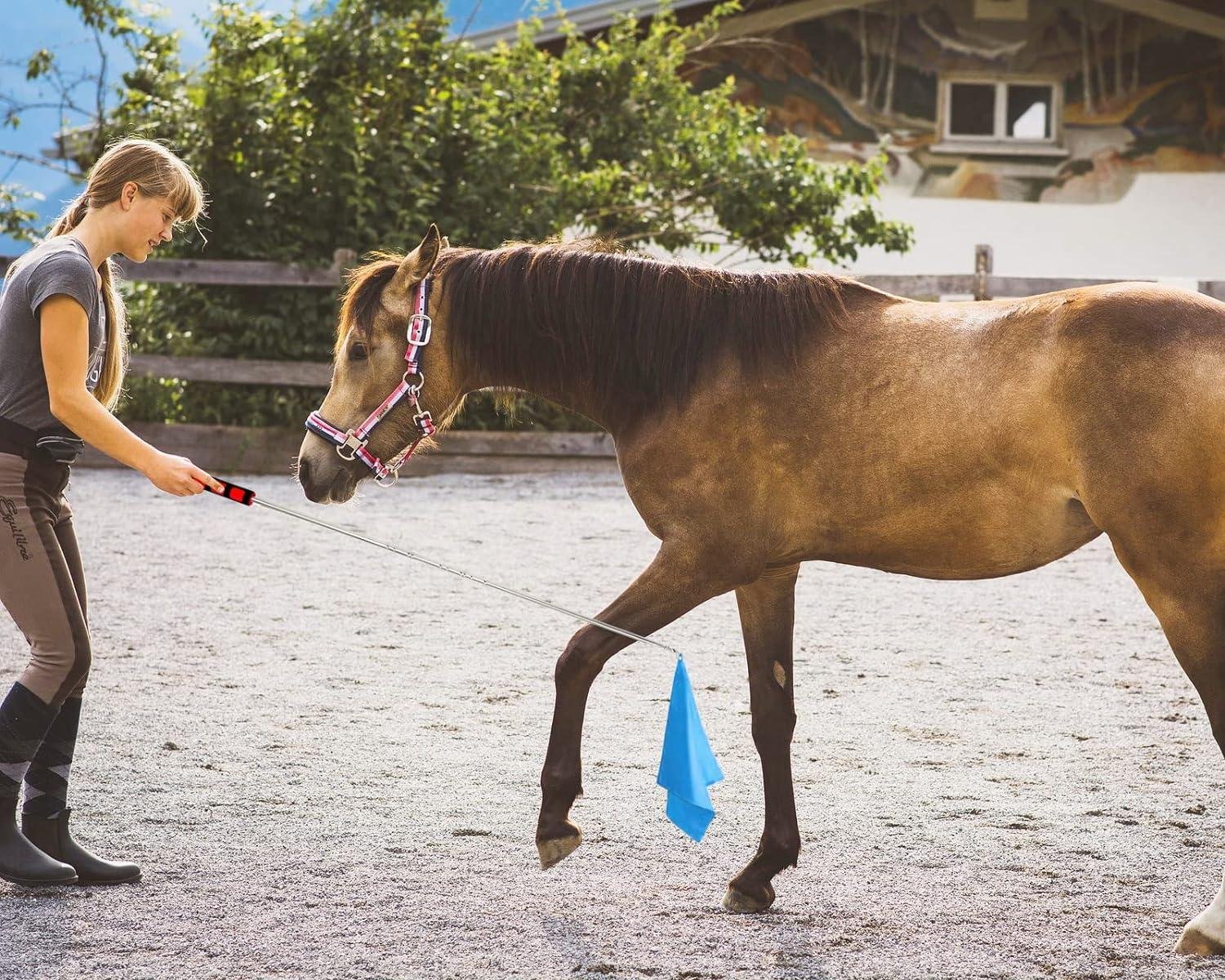
Horses naturally notice movement in their surroundings, particularly movement that is unexpected.
A training flag can be introduced gradually so that the horse learns that movement around them does not necessarily represent danger.
For example, the flag may initially be held still at a comfortable distance before being moved gently.
As the horse becomes more relaxed, the handler can gradually introduce different positions and movements.
The objective should be to build confidence rather than simply make the horse tolerate something that frightens them.
- Supporting Groundwork Training
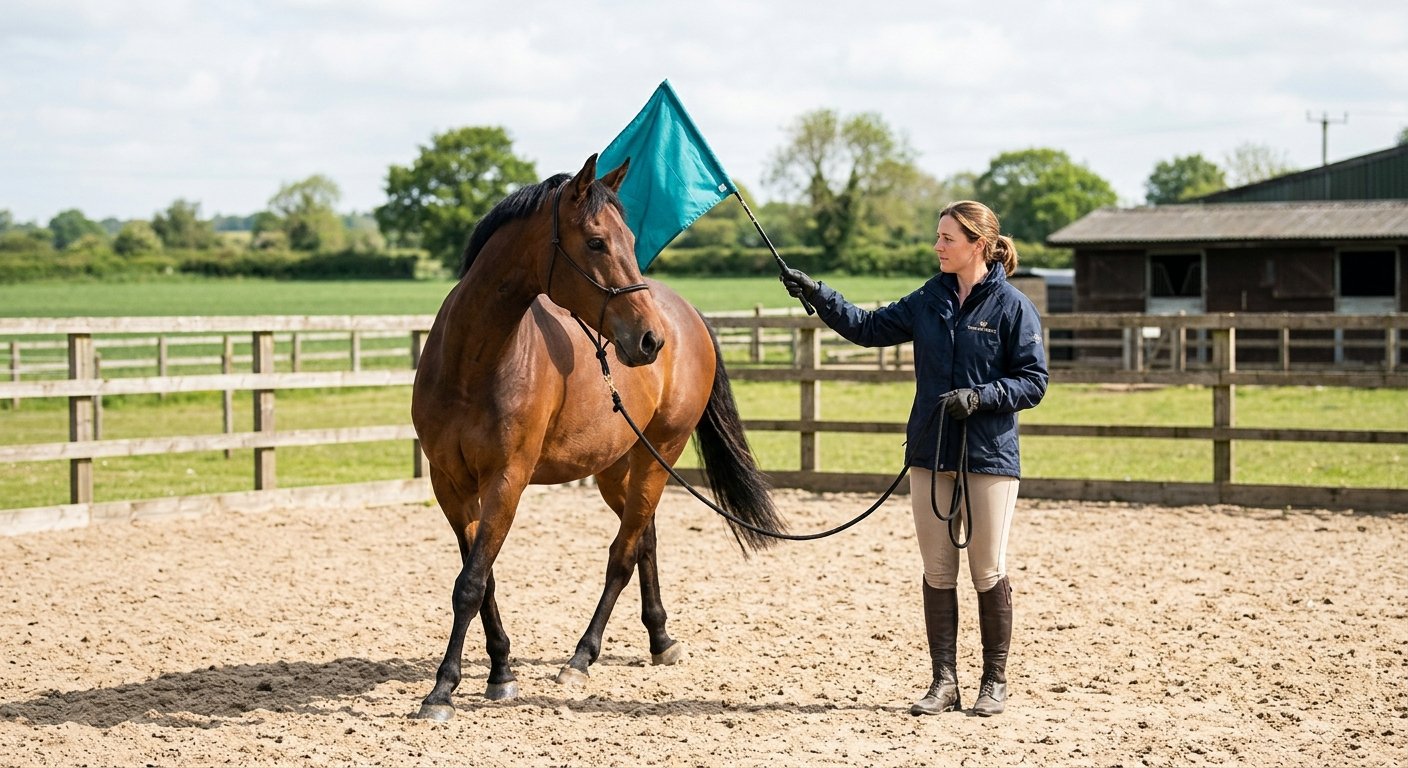
A flag can provide a clear visual cue when teaching groundwork exercises.
Depending on the training method being used, it may help ask a horse to:
- Move forwards
- Step away from pressure
- Change direction
- Move the shoulders or hindquarters
- Maintain personal space
- Stop or change pace
- Focus on the handler
Because the flag can be seen easily, relatively small movements can communicate clearly once the horse understands what those movements mean.
Over time, the goal is normally to use increasingly subtle cues rather than continually making bigger movements.
- Teaching Pressure and Release
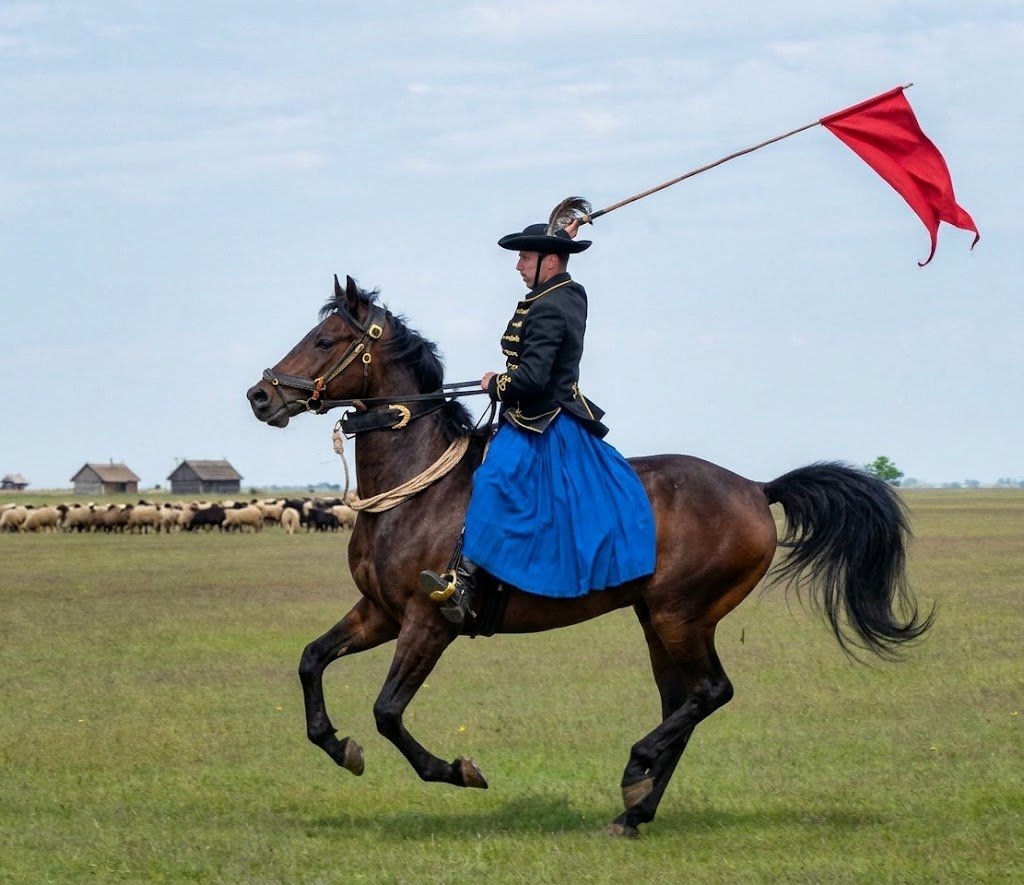
One of the fundamental concepts used in many forms of horse training is pressure and release.
Pressure doesn’t necessarily mean physical force.
It might simply be the handler changing their posture, lifting a rope, moving towards a certain area of the horse or raising a training flag.
When the horse gives the desired response, that pressure is removed or reduced.
The release is important because it helps the horse understand which response was being requested.
For this reason, timing and consistency are far more important than waving the flag vigorously.
- Helping Build Confidence
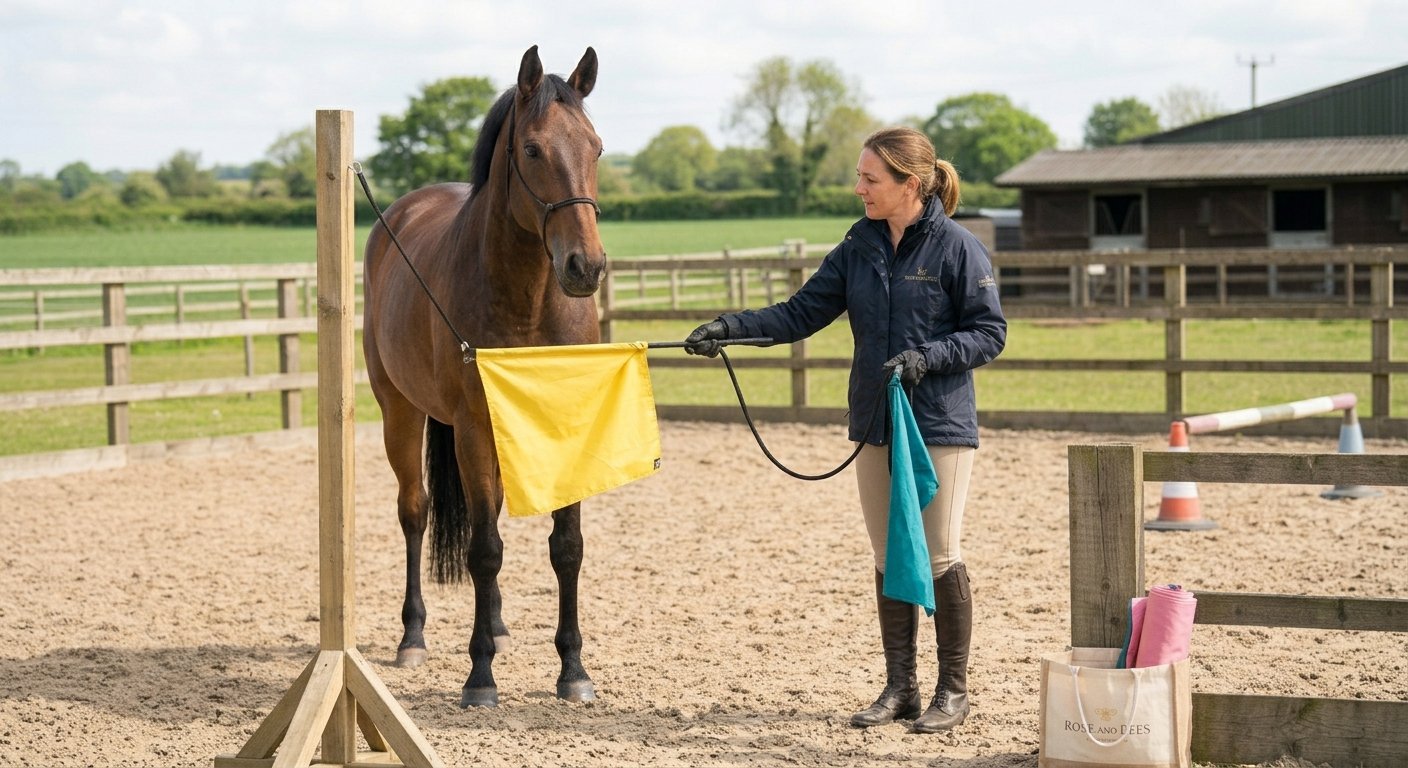
Training flags are sometimes used as part of confidence-building exercises.
A horse might eventually encounter many unfamiliar sights and movements, including:
- Flapping clothing
- Umbrellas
- Plastic bags
- Vehicles
- Banners
- Gates
- Machinery
- Wind-blown objects
- Movement around the stable or yard
A calmly introduced flag provides a controlled way of working around movement.
Every horse is different, however. Some will investigate a new object immediately, while others may need considerably more time and space.
- Creating Safer Distance During Training

One advantage of a training flag is that it extends the handler’s reach.
For example, rather than immediately reaching towards an unfamiliar horse’s hindquarters or legs with your hand, the flag can sometimes be used from further away while the horse becomes comfortable with something approaching or touching that area.
The additional distance can be useful when working with young or unfamiliar horses.
It should not, however, create a false sense of security. Horses are large, powerful animals and safe positioning and experienced handling remain essential.
How Do You Introduce a Horse to a Training Flag?
- The most important principle is gradual introduction.
- Avoid immediately waving a new flag around a horse that has never seen one before.
- Start at a Comfortable Distance
- Allow the horse to see the flag without forcing them towards it.
- Keep your own body language calm and give the horse an opportunity to look at and process the object.
- Begin With Small Movements
- Start with the flag relatively still.
- Once the horse appears comfortable, introduce a small amount of movement.
- You can gradually increase movement as confidence develops.
- Watch the Horse Carefully
- Look at the whole horse rather than focusing only on whether their feet are standing still.
- Signs that a horse is worried may include increased tension, rushing away, a raised head, staring, attempts to escape or becoming increasingly reactive.
- Simply forcing a horse to remain still does not necessarily mean they have become confident.
- Reward Relaxation
- When the horse gives the response you are looking for, reduce or remove the pressure.
- This may mean lowering the flag, stopping the movement or moving away slightly.
- Good timing helps the horse understand what they did correctly.
- Work Gradually Around the Horse
- Once the horse is comfortable with the flag in one area, training can progress gradually.
- Avoid assuming that because the horse accepts the flag near their shoulder, they will automatically feel equally comfortable with movement above, behind or around other parts of their body.
Should You Wave a Training Flag at a Horse?

- This is where training flags can easily be misunderstood.
- The purpose isn’t to stand in front of a horse and repeatedly wave a flag until they eventually stop reacting.
- Too much pressure can overwhelm a horse rather than teach them.
- A horse that is extremely frightened is unlikely to be concentrating properly on what you are asking.
- Instead, movement should have a clear purpose and the level of pressure should suit the individual horse.
- Think of the training flag as a communication tool rather than a frightening object.
Is a Horse Training Flag the Same as a Whip?
Not exactly.
- Although both can extend the handler’s reach, a horse training flag creates a much more visible cue because the fabric moves and changes shape.
- The flag is commonly used as an extension of body language during groundwork and familiarisation exercises.
- Most importantly, it should never be regarded as a tool for punishing a horse.
What Size Horse Training Flag Should I Choose?
There isn’t one flag size that suits every training situation.
A smaller flag can be useful when you want something lightweight and manageable, particularly for more subtle groundwork.
A larger flag creates greater visual movement and may be preferred when you want the horse to recognise the cue easily from further away.
At Rose & Bees, our horse training flags are available in two useful sizes:
14 × 16 inches and 20 × 20 inches
- This gives horse owners and trainers the option of choosing the size that best suits their preferred training style and situation.
- Our training flags are made using durable ripstop fabric, making them lightweight and practical for regular groundwork and horsemanship use.
Why Use Ripstop Fabric for a Horse Training Flag?

A training flag needs to move easily while still being durable enough for outdoor and yard use.
Ripstop fabric is particularly suitable because of its lightweight construction and reinforced structure.
This makes it a practical choice for a flag that may regularly be moved, folded, stored and used around a stable yard, arena or training environment.
Common Mistakes When Using a Horse Training Flag
A useful tool can become ineffective if it is used without good timing or understanding.
Some mistakes to avoid include:
- Introducing too much movement too quickly
- Continuing to apply pressure when the horse has already responded
- Using the flag simply to chase the horse
- Assuming a horse standing still is automatically relaxed
- Standing in an unsafe position
- Moving directly into a frightened horse’s space
- Failing to give the horse time to process something new
- Using stronger pressure when better timing would be more effective
Good horsemanship is about observing the individual horse and adjusting accordingly.
Can You Use a Training Flag With a Young Horse?
Training flags are commonly used during groundwork with young horses, but working with inexperienced horses requires appropriate knowledge and handling skills.
A young horse may have very little understanding of the cues being presented and may react unpredictably.
Sessions should remain calm and progressive.
If you are inexperienced, or your horse is particularly nervous or reactive, working alongside a qualified and experienced horse trainer is the safest approach.
Does Every Horse Need Flag Training?
No.
A horse training flag is simply one of many tools that can be used during groundwork.
Different trainers use different techniques, and individual horses respond differently to particular methods.
The important thing isn’t whether a flag is used.
It’s whether the horse understands what the handler is asking and whether training is carried out calmly, consistently and safely.
Choosing a Good Horse Training Flag

When choosing a training flag, look for one that is:
- Lightweight
- Easy to see
- Easy to control
- Durable
- Suitable for repeated movement
- Appropriately sized for your training needs
A flag that is unnecessarily heavy or awkward can make precise communication more difficult.
The handler should be able to control when the flag moves and, equally importantly, when it becomes still.
Final Thoughts
A horse training flag may look like a very simple piece of equipment, but in experienced hands it can be an extremely useful communication tool.
It can support groundwork, help introduce horses to movement, assist with pressure-and-release training and provide additional reach while working around a horse.
The key is how the flag is used.
Training should remain progressive, calm and appropriate for the individual horse. The objective should be understanding and confidence rather than fear.
If you’re looking for a practical flag for groundwork or horsemanship training, explore our Rose & Bees Horse Training Flags, handmade in the UK using durable ripstop fabric and available in 14 × 16 inch and 20 × 20 inch sizes.
Shop Horse Training Flags at Rose & Bees
⸻
horse training flags, training flag for horses, horse groundwork flag, horsemanship flag, horse desensitising flag, groundwork training for horses, horse confidence training